Articles, case studies and insights on modern training, conversational AI and pedagogy.
 Creating e-learning modules
PDF to e-learning in 4 steps: keep what must be learned, split it up, talk to the learner, ask questions, then review the module against the PDF.

 E-learning tools and platforms
Articulate 360 pricing as of October 3, 2026: $1,749 per seat per year on Teams, $1,449 on Personal. What's included, credits and team totals.
 Assessment and learner engagement
How to write multiple choice questions that really test understanding: 10 rules, before-and-after examples, and a checklist to review an AI quiz.
 AI in training
7 ChatGPT prompts to create a training course, from scoping to quiz: the text to copy, the brackets to fill in and what to check at each step.
 Creating e-learning modules
How to turn a PowerPoint into e-learning: narrated video, authoring tool or AI generation. What each path keeps, what it loses, and which LMS it suits.
 E-learning tools and platforms
LTI vs SCORM: one connects your LMS to a tool hosted elsewhere, the other drops a file into it. What each one reports, and the questions to ask.
 Assessment and learner engagement
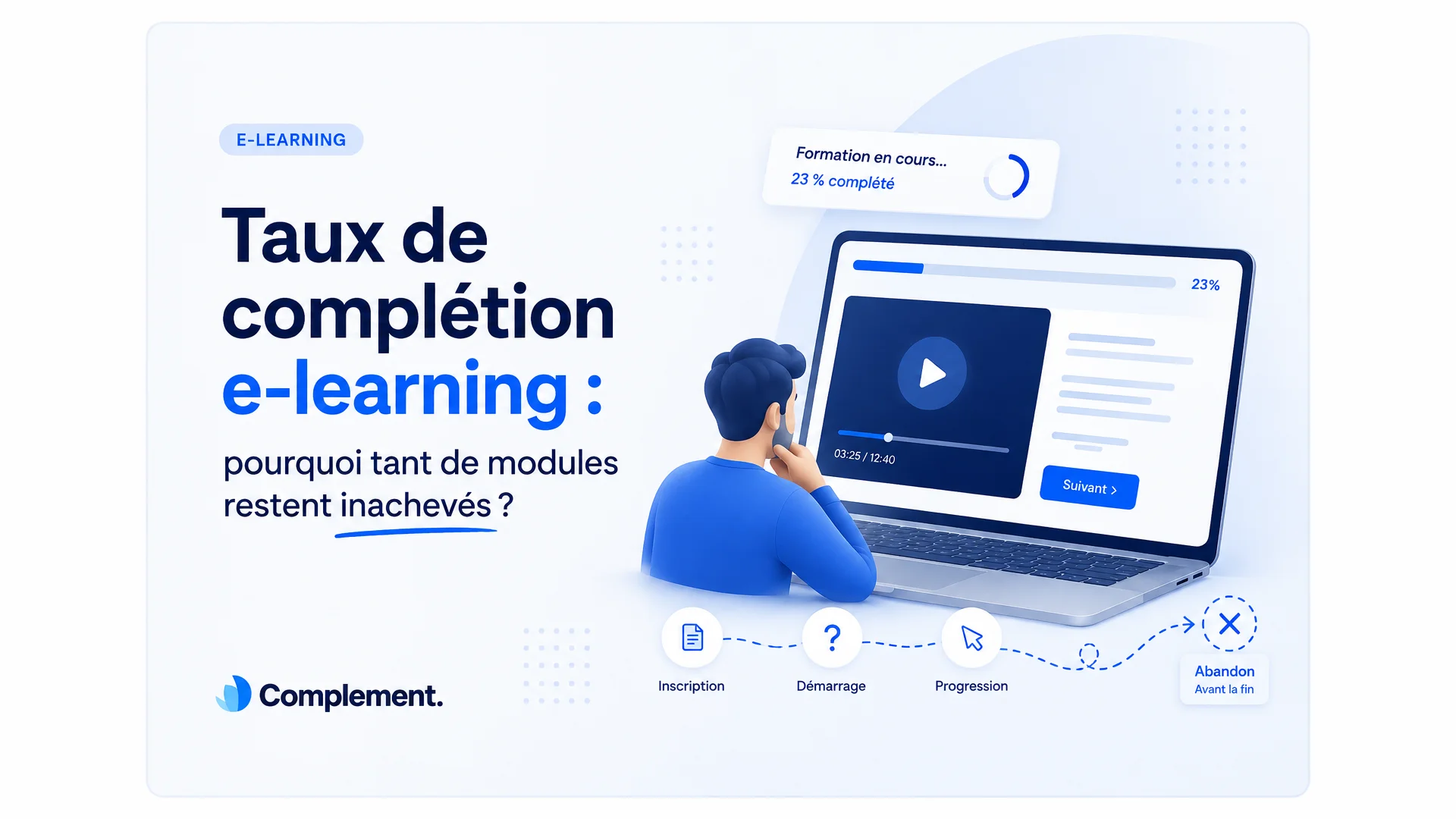
Why do so many e-learning modules remain unfinished? Let's take a deep dive into the numbers, the causes of drop-off, and how conversational learning can shift the paradigm for digital learning.
 AI in training
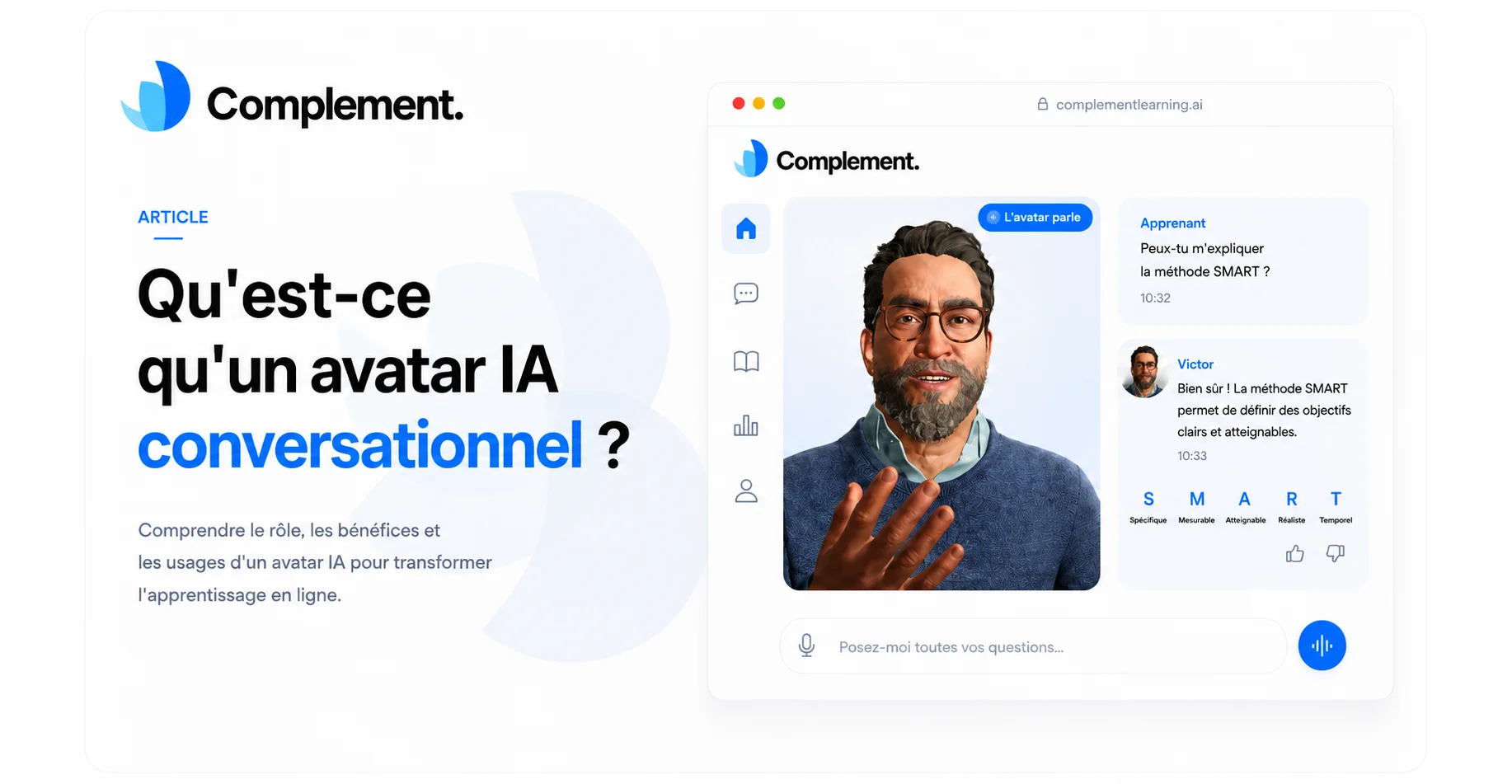
Understand how a conversational AI avatar works, what sets it apart from a chatbot, and the advancements it brings to training.
 Creating e-learning modules
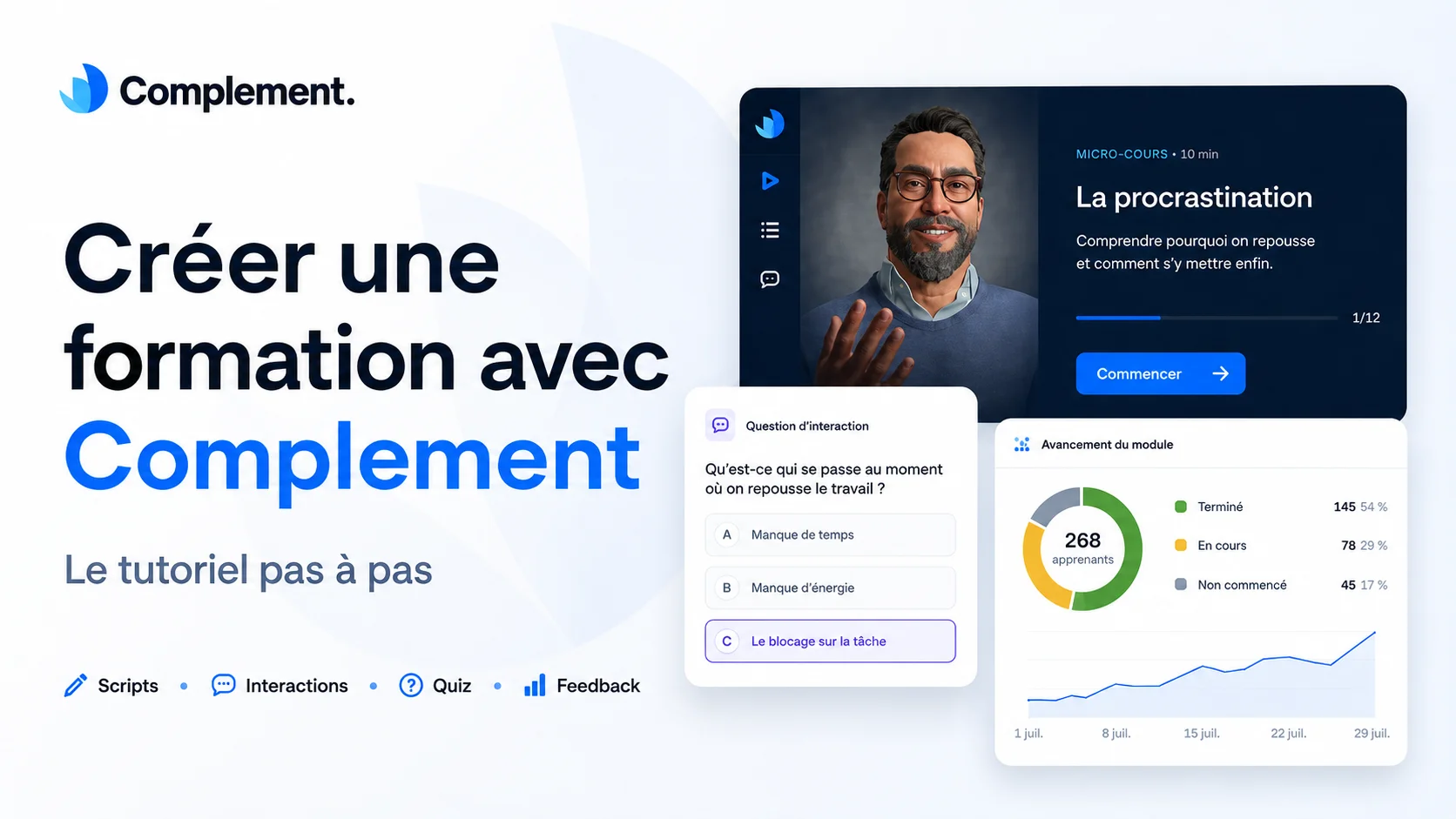
Discover how to create a training course with Complement, add interactions, customize feedback, and analyze learner responses.
 AI in training
Passive video or interactive AI avatar? Discover why questions, feedback, and dialogue foster engagement, understanding, and retention.
 News
10 reflections to step back and rethink your L&D strategy before September

 Creating e-learning modules
Why the ideal training duration depends less on the number of minutes than on how those minutes are used
 News
Complement is rolling out V2 of its platform featuring Voice Live, a new AI engine that makes voice interactions faster, smoother, and more natural. A redesigned experience, enriched exercises, and customizable avatars for increasingly immersive training.
 AI in training
AI Tutor vs Traditional E-Learning: Which Approach Is More Effective?
 AI in training
From dedicated AI tutors and adaptive learning to immersive simulations, artificial intelligence is reshaping how people learn. Here are the most impactful AI use cases transforming education and training today.
 Instructional design
Student cohorts are becoming increasingly diverse, making it difficult for traditional one-size-fits-all teaching approaches to meet every learner's needs. While some students struggle with foundational gaps, others lack sufficient academic challenge. Adaptive learning offers a scalable way for universities to personalize learning experiences, support remediation, and improve student success across a wide range of academic backgrounds.
 Assessment and learner engagement
How Artificial Intelligence Is Transforming Student Support
 AI in training
Discover how AI coaches personalize learning, increase employee engagement, and provide scalable support throughout the learning journey.
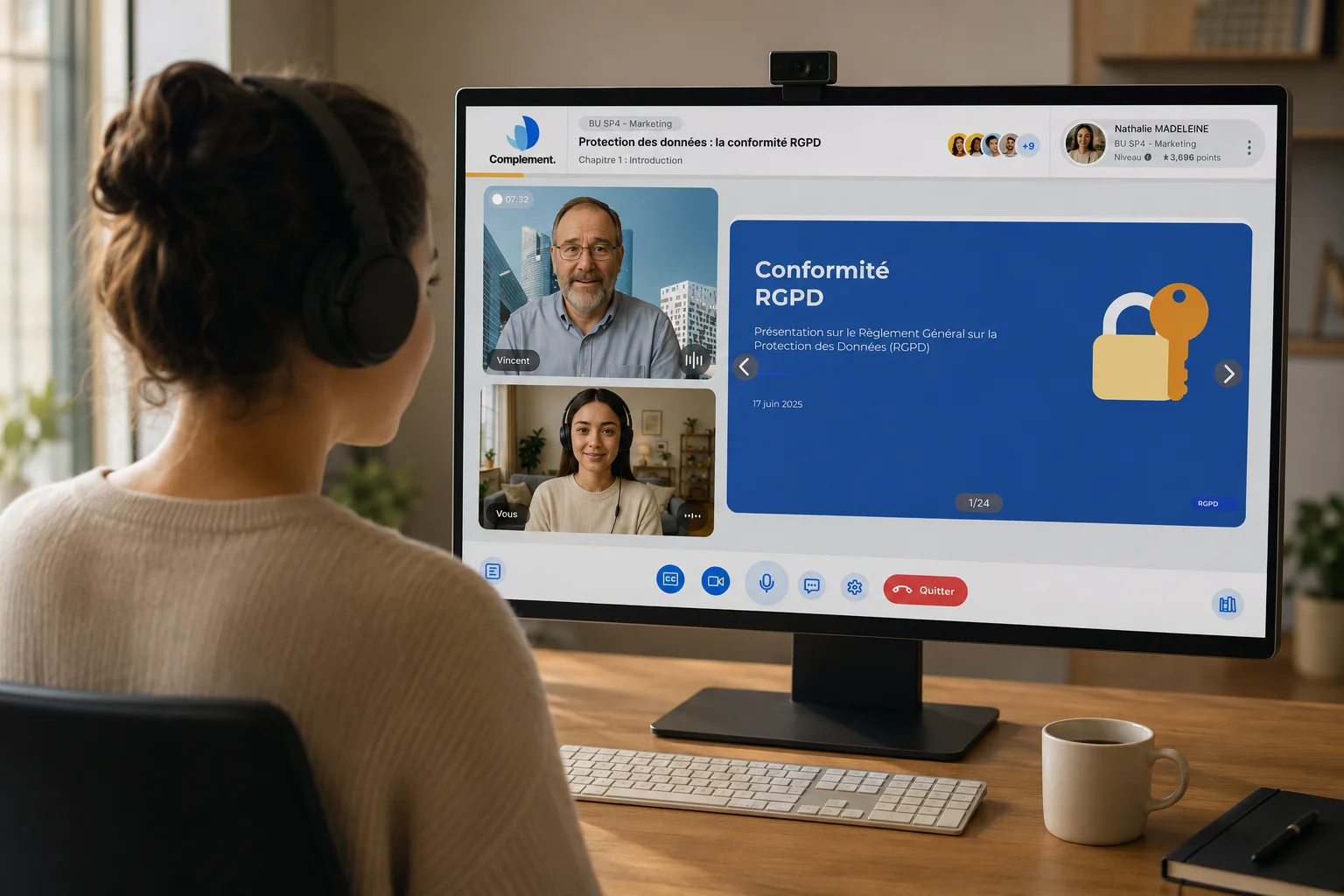 AI in training
And Why Artificial Intelligence Is No Longer Just About Creating Content
 E-learning tools and platforms
And why companies are rethinking workplace learning beyond the traditional LMS model
 Resources
And why the first weeks often determine the long-term customer relationship
 Workplace training
Why Top Performers Rarely Learn Through Traditional Training
 News
How to retain talent in a world transformed by automation through adaptive learning and continuous skill development
 Workplace training
Successful onboarding goes beyond information delivery. By integrating real-world scenarios, feedback, and practice, organizations can accelerate employee ramp-up, improve retention, and maximize the business impact of onboarding.
 Instructional design
Transforming training into learner-centered experiences requires moving beyond content delivery toward real-world scenarios, active engagement, and structured feedback. By integrating learning into daily work and leveraging technology, organizations can create experiences that drive lasting behavioral change and performance improvement.
 Workplace training
Workplace safety depends on employees’ ability to react effectively in real situations, not just on their knowledge of rules. As risks remain significant, organizations must rethink training by integrating realistic, scenario-based learning accessible anytime. This approach helps build lasting reflexes, improves risk prevention, and strengthens daily safety for frontline teams.
 AI in training
Artificial intelligence is not just transforming tools, it is reshaping how work is performed. By integrating directly into daily tasks, AI changes how employees think, decide, and learn. The real challenge for organizations is no longer adoption, but structuring high-quality usage to build consistent and effective practices across teams.
 Creating e-learning modules
Rethinking Learning Formats in the Age of AI With AI, learning is no longer separate from work. Discover how organizations can evolve learning formats into continuous, work-integrated environments.
 Assessment and learner engagement
Corporate training often struggles to deliver measurable results due to a lack of direct connection with real work situations. To be truly effective, training programs must go beyond content delivery and closely reflect real-world decision-making contexts. By integrating practice, active engagement, and feedback, organizations can improve skill transfer and better measure the impact of training on operational performance.
 Product
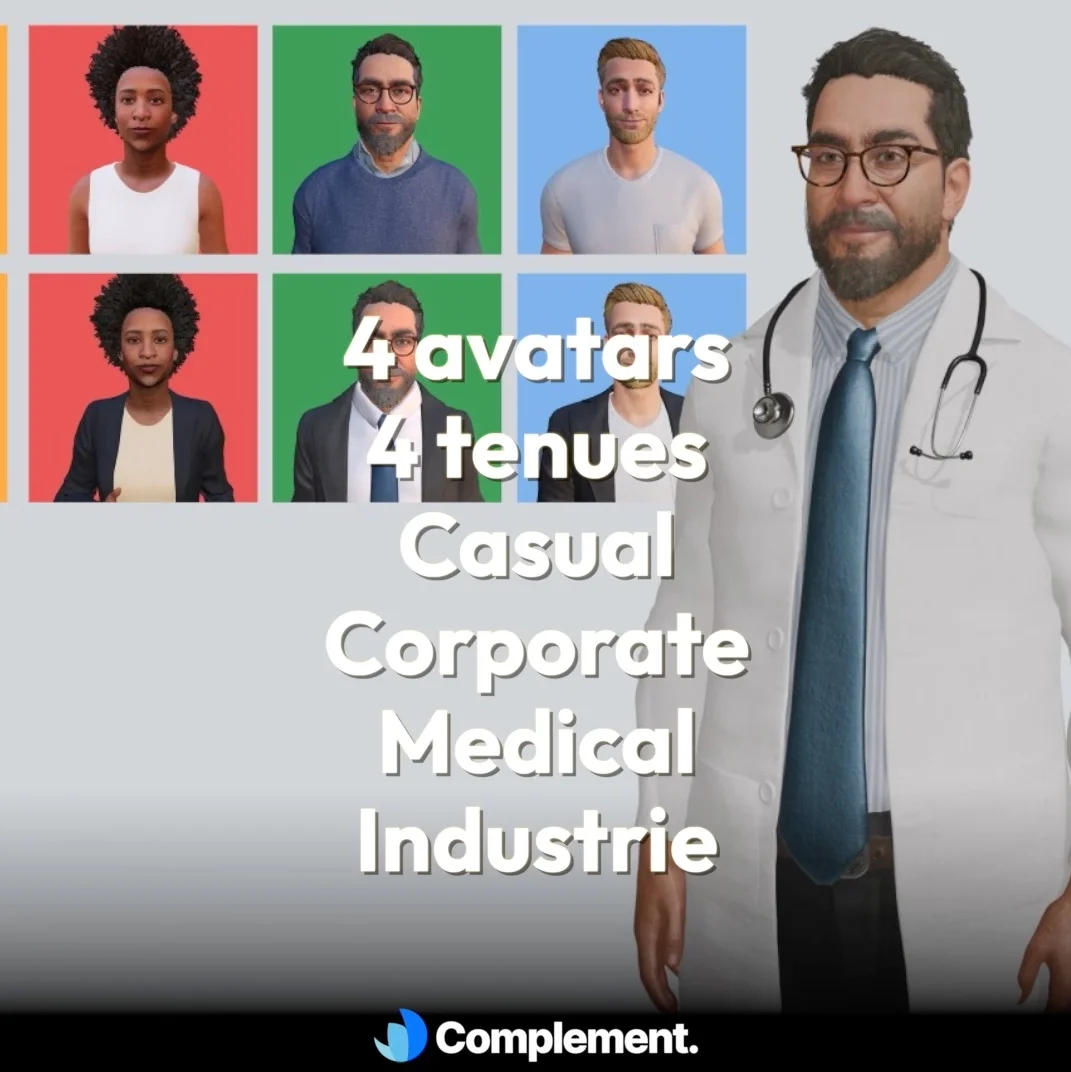
Since day one, our ambition has been simple: to make learning more engaging, interactive, and effective. Very quickly, one conviction became clear: embodiment plays a key role. Today, after 6 months of work, we are unveiling new photo-realistic avatars.

 Workplace training
Artificial intelligence is profoundly transforming cybersecurity by enabling large-scale detection of vulnerabilities. However, this progress creates a new challenge: a massive increase in vulnerabilities that is difficult for security teams to absorb. At the same time, AI usage is rapidly expanding, often without clear governance, increasing the risks associated with human error. Today, the real issue is no longer purely technical, it lies in understanding and controlling how AI is actually used within organizations.
 Instructional design
In both corporate settings and training environments, concerns are mounting. Some point to a loss of focus, decreased memorization, or an increasing dependence on tools. Yet, beneath these perceptions, the reality is more nuanced. AI does not reduce intelligence; it transforms the way we mobilize our cognitive abilities.
 AI
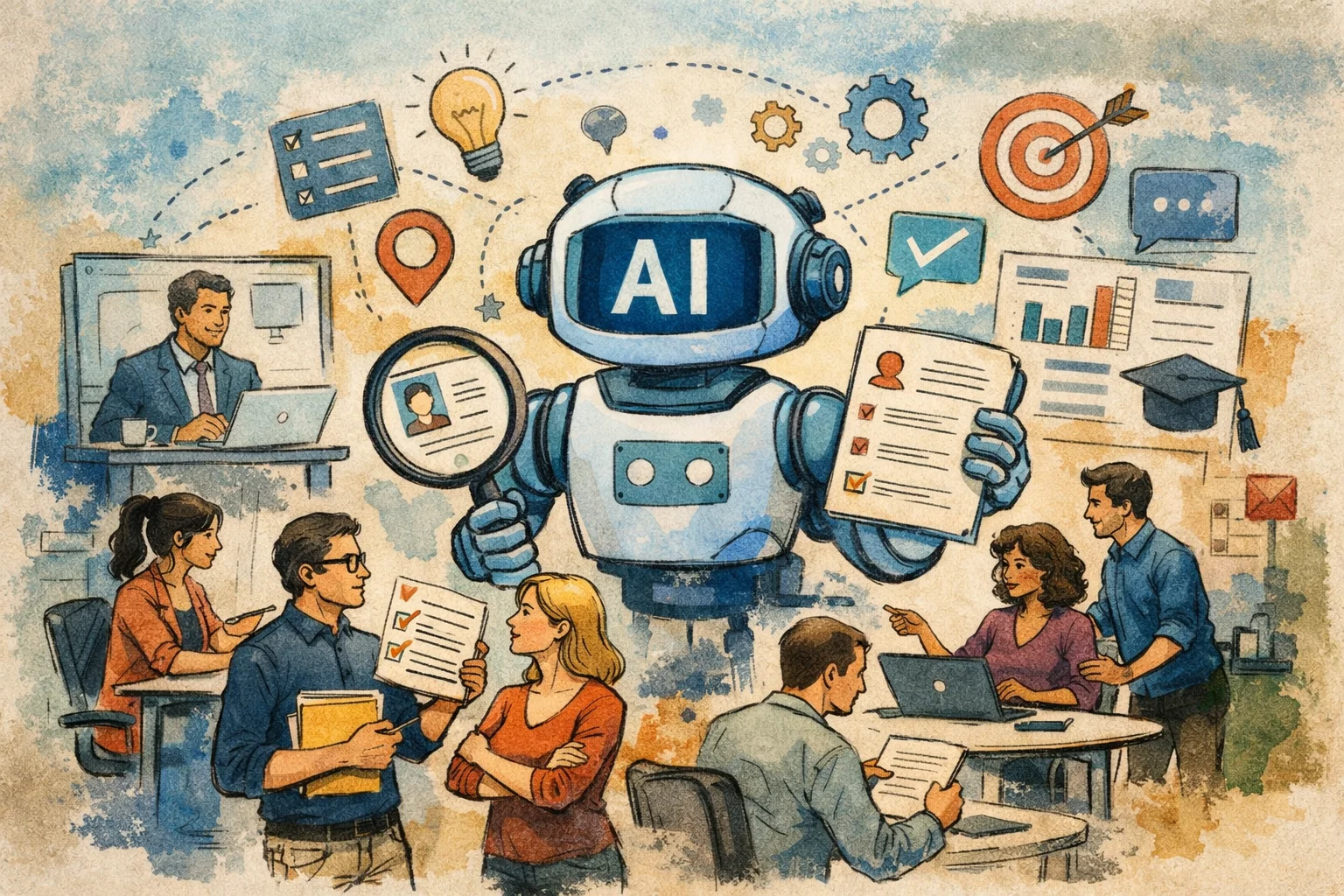
Generative artificial intelligence is profoundly transforming HR functions. From recruitment to training and skills management, the opportunities are vast. Yet, its implementation remains limited in many organizations.
 News
Complement announces a €660,000 fundraising round from business angels and a strategic investor, IÉSEG School of Management, bringing total funding to over €1 million.
 News
Complement announces its entry into GenAI Studio, the acceleration program dedicated to generative AI operated by Microsoft. The startup will recode its AI core on Azure with the support of Microsoft architects.
 News
Complement has been selected as a laureate of the Réseau Entreprendre Essonne and will benefit from an honor loan and personalized mentoring from business leaders who are members of the network.
 News
Complement announces its selection as a winner of the Wilco Digital acceleration program, granting it access to a non-dilutive loan and structured strategic support to accelerate its national rollout.
 Higher education
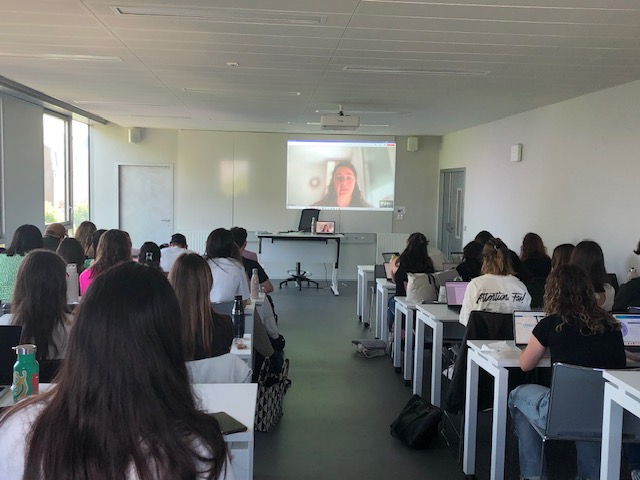
A look back at a flipped classroom experiment with Audencia Master 2 students: a module on disinformation co-developed with a professor and led by a conversational AI avatar. 70% of students improved their understanding of the topic.
 Assessment and learner engagement
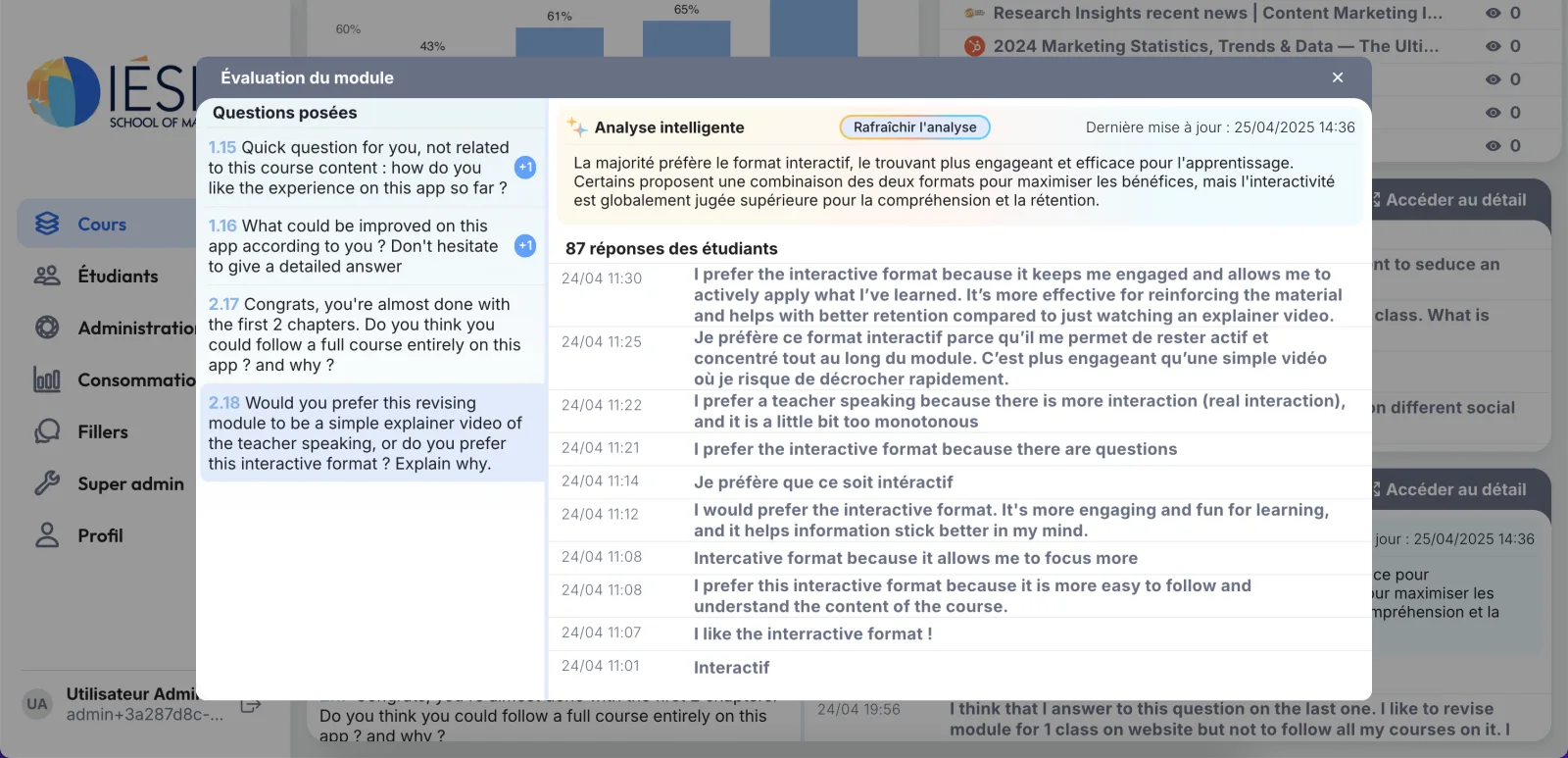
Complement is launching oral evaluation questions delivered by our AI avatar directly within the learning path, enabling the collection of qualitative feedback without ever leaving the platform.
 Higher education
A look back at a morning at IESEG with 95 Master 1 Digital Marketing students: 120 questions asked to the avatar, 65 cumulative hours spent on the platform in a single morning, and 93.5% positive feedback.

